Sitecore vs Storyblok: Which CMS is right for enterprise?

Sitecore vs Storyblok: Which CMS is right for enterprise?
Sitecore has powered enterprise websites for over two decades, but the cost and complexity of maintaining it keeps growing. Many organisations spend more on infrastructure, developers, and upgrades than on actually improving their digital experience.
Storyblok represents a different approach entirely. As a headless CMS, it separates content from presentation, giving teams flexibility that monolithic platforms cannot match.
This Sitecore vs Storyblok guide compares both platforms across architecture, cost, usability, and performance. Use it to decide which fits your organisation in any Sitecore vs Storyblok evaluation.
Sitecore vs Storyblok at a glance: key differences
Sitecore is a Digital Experience Platform that bundles content management, personalisation, and marketing automation into one tightly integrated system. Storyblok is a headless CMS, which means it separates content storage from how that content gets displayed. Content lives in Storyblok and gets delivered via API to whatever frontend your team builds.
Area | Sitecore | Storyblok |
|---|---|---|
Architecture | Monolithic or composable DXP | Headless, API-first CMS |
Pricing model | Enterprise licensing plus infrastructure | SaaS subscription |
Setup complexity | High, requires .NET specialists | Moderate, faster implementation |
Editorial experience | Feature-rich but steep learning curve | Visual editor, intuitive interface |
Multi-site and multi-brand | Supported but adds complexity | Native multi-space support |
Best for | Organisations committed to Sitecore ecosystem | Organisations prioritising flexibility and speed |
The architectural difference shapes everything else. Cost, team workflows, performance, and long-term flexibility all flow from whether your platform couples content and presentation together or keeps them separate.
Sitecore and Storyblok explained: platform overview
Sitecore has been a major player in enterprise content management for over two decades. The platform combines CMS capabilities with personalisation engines, marketing automation, and commerce features. Traditionally, Sitecore ties content and presentation together, though newer composable options exist.
Storyblok works differently. As a headless CMS, it stores content separately from how that content appears on screen. Your development team pulls content through APIs and displays it however makes sense for the project.
This separation gives teams freedom to choose their frontend technology without being locked into a specific stack.
The term "headless" simply means the CMS has no built-in frontend. Content lives in a central repository and gets pulled into whatever presentation layer fits the project.
Architecture and platform approach
Sitecore's architecture requires .NET expertise and specific hosting environments. Development teams work within a tightly integrated stack where content, presentation, and business logic connect closely. This creates consistency but limits flexibility when requirements change.
- Sitecore: Requires dedicated infrastructure, either self-managed or through Sitecore Cloud. Upgrades involve significant planning, and customisations often create technical debt.
- Storyblok: Frontend-agnostic architecture works with React, Vue, Astro, or static site generators. The CMS handles content while developers choose the best tools for performance.
Headless architecture opens the door to modern frontend approaches. Frameworks like Astro generate lightweight, static pages rather than server-rendered content with heavy JavaScript bundles. The performance difference is noticeable.
Usability for marketing and content teams
Day-to-day usability matters more than feature lists. Marketing teams working with Sitecore's Experience Editor often find themselves waiting for developers to make changes that feel straightforward. The interface is powerful but complex.
Storyblok's visual editor shows the page exactly as visitors will see it. Editors can drag components, reorder sections, and preview changes across device sizes without leaving the interface. Updates appear instantly.
This difference changes how quickly teams can publish and iterate. Content governance works differently too.
Storyblok's component-based approach means editors work within defined structures. They can create and modify content without accidentally breaking layouts or introducing inconsistencies.
Cost and total cost of ownership
Sitecore licensing sits at the premium end of the market. However, licensing is only part of the picture.
- Infrastructure: Sitecore requires substantial hosting resources and dedicated teams. Sitecore Cloud simplifies this but adds cost.
- Development: .NET specialists averaging £100,000 per year are harder to find than frontend developers comfortable with JavaScript frameworks.
- Ongoing maintenance: Upgrades involve significant effort and customisations often need reworking between versions. Many organisations stay on older versions because upgrading is too costly.
- Hidden costs: Years of customisation create technical debt. Integrations built for one version may not work with the next.
Storyblok's SaaS model includes hosting, updates, and security patches. The subscription is predictable. Frontend development requires investment upfront, but the broader talent pool and modern tooling typically reduce long-term costs.
Multi-brand and multi-market scalability
Enterprise organisations rarely manage a single website. Multiple brands, regional variations, and language requirements create complexity that many platforms handle poorly.
Centralised content models for global brands
Storyblok's component-based content modelling allows teams to define reusable structures once and deploy them across brands. A product card, hero banner, or navigation pattern works consistently everywhere while allowing local customisation where appropriate.
Sitecore supports similar approaches but implementations often fragment over time. Different teams make different decisions. Without strong governance, multi-brand Sitecore estates become difficult to maintain.
Localisation and regional workflows
Both platforms support multi-language content. Storyblok offers field-level translation where specific content varies by market while structure remains consistent.
Folder-level translation allows entirely different site structures per region. Many organisations use both approaches for different content types.
Sitecore's localisation is configurable but requires more setup. Translation workflows depend heavily on implementation choices made early in the project.
Governance and permissions at scale
Role-based access controls determine who can edit what. Storyblok handles this natively with spaces and granular permissions. Regional teams can manage their content without affecting other markets.
Sitecore offers deeper customisation for complex governance but requires more configuration to achieve similar outcomes.
Performance, SEO, and Core Web Vitals
Headless architecture inherently supports better performance because the frontend is decoupled and can be optimised independently.
Sitecore sites often struggle with page speed. Server-side rendering adds latency. Heavy JavaScript frameworks compound the problem.
Many Sitecore implementations score poorly on Core Web Vitals, which directly affects search rankings.
Storyblok paired with modern frameworks delivers consistently strong performance. Static site generation with Astro produces pages that load in milliseconds. Clean markup and minimal JavaScript mean better scores across all Core Web Vitals metrics.
Google uses Core Web Vitals as a ranking factor, so faster sites rank higher when other factors are equal.
AI discoverability and structured content
Search is changing. Gartner predicted a 25% drop in traditional search engine volume by 2026. AI systems increasingly interpret and summarise content rather than simply indexing keywords.
How content is structured affects whether AI can understand and surface it accurately.
Storyblok's component-based content model creates inherent structure. Each piece of content has defined relationships and context. This makes it easier for AI systems to interpret meaning and connections across a website.
Sitecore can achieve similar outcomes but requires deliberate architectural decisions. The platform does not enforce structure in the same way.
Structured content is becoming essential for visibility as AI-driven search grows more prominent.
Integrations and ecosystem fit
Sitecore offers a broad ecosystem. Marketing automation, personalisation, commerce, and analytics are available within the platform. This creates convenience but also vendor lock-in.
Moving away from any part of the stack becomes difficult once deeply integrated.
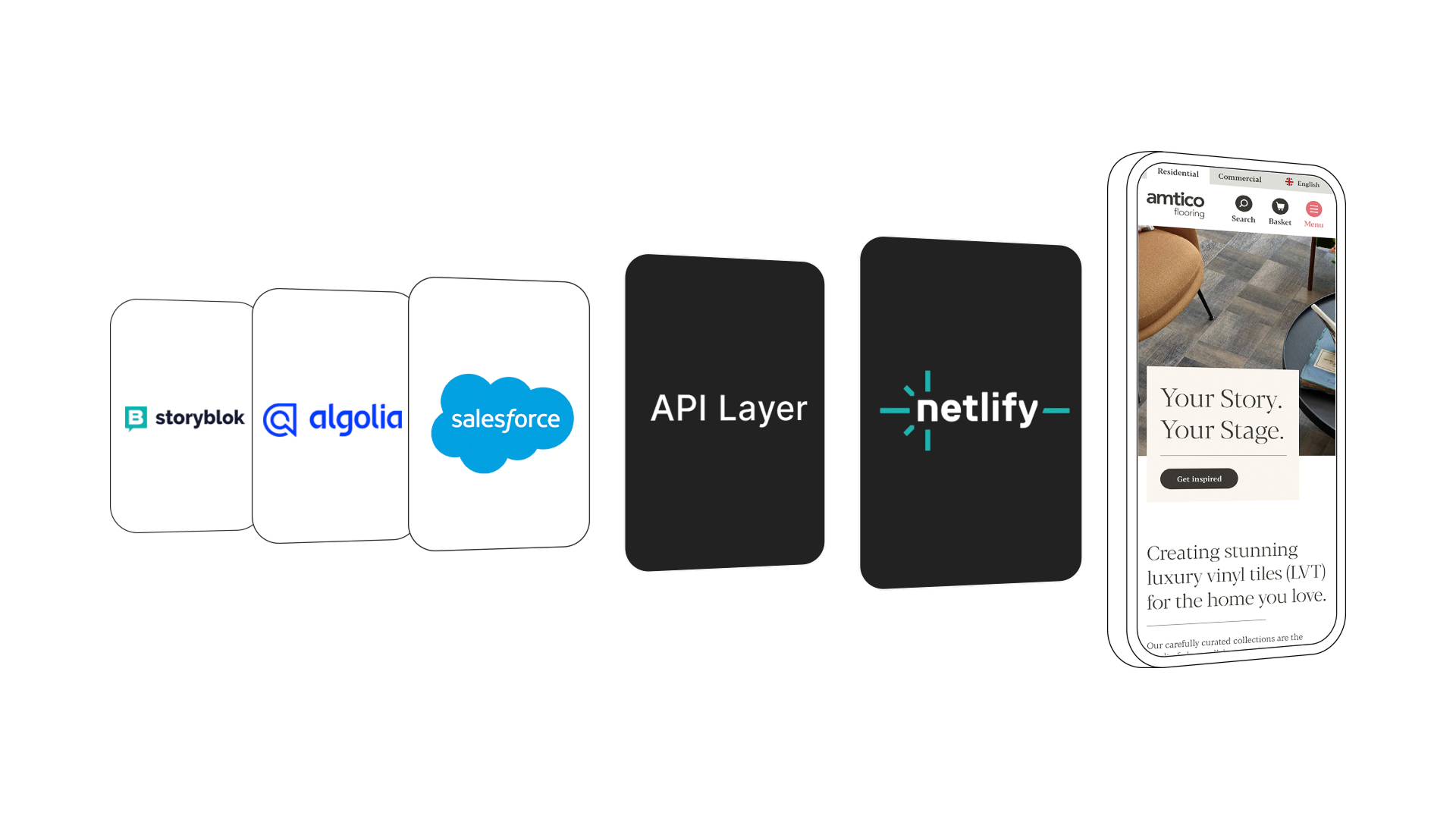
Storyblok takes a composable approach. The CMS handles content while best-of-breed tools handle other functions.
- Marketing automation: HubSpot, Marketo, or similar platforms integrate via APIs
- Search: Algolia provides fast, relevant search experiences
- Commerce: Headless commerce platforms like Shopify Plus or commercetools connect cleanly
- CRM: Salesforce and Microsoft Dynamics 365 integrate through standard APIs
The composable approach requires assembling tools rather than accepting a bundled suite. For many organisations, this flexibility outweighs the convenience of an all-in-one platform.
Migrating from Sitecore to Storyblok
Migration concerns often delay decisions that would otherwise be straightforward. The risks are real but manageable with proper planning.

1. Audit
Review existing content, URL structures, and performance data. Decide what to migrate, consolidate, redirect, or retire. Define the future content model based on what works best, not legacy constraints.
2. Align
Map content into the new structured model in Storyblok. Configure spaces, build reusable components, and set governance. Confirm translations and market-specific variations.
3. Protect
Execute content migration with care. Implement redirect mappings to preserve SEO value. Validate indexing, tracking, and lead flows before launch. Protecting existing rankings is critical.
4. Launch
Roll out in planned phases by brand or market. Monitor traffic, search performance, and user behaviour closely during transition. Support teams with training on new workflows.
5. Validate
Track performance post-launch across traffic, indexing, and conversions. Address issues quickly and complete consolidation. Establish processes for ongoing optimisation.
Most enterprise migrations take three to six months from discovery to launch.
When Sitecore is still the right choice
Sitecore makes sense in specific circumstances. Organisations deeply invested in the ecosystem with established teams and workflows may find migration disruptive without sufficient benefit.
Native personalisation at scale remains a Sitecore strength, though many organisations overestimate their personalisation requirements. Specific compliance or regulatory requirements sometimes favour Sitecore's on-premise deployment options. Large organisations with dedicated Sitecore teams and significant existing investment may reasonably choose to optimise their current platform rather than migrate.
Migration is not always the right answer. The decision depends on current pain points, future requirements, and realistic assessment of transition costs.
Choosing the right CMS for your enterprise
Storyblok suits organisations prioritising speed, flexibility, and modern frontend performance. Marketing teams gain independence. Development teams work with better tools.
Total cost of ownership typically decreases.
The Sitecore vs Storyblok comparison shows Sitecore suits organisations committed to an all-in-one DXP with deep personalisation and existing ecosystem investment. The platform remains capable, though increasingly expensive and complex relative to alternatives.
Most organisations migrating from legacy CMS platforms find headless approaches deliver better outcomes across cost, usability, and performance. The shift reflects broader changes in how digital platforms are built and maintained.
Frequently asked questions: Sitecore vs Storyblok
Is Storyblok a replacement for Sitecore?
Storyblok can replace Sitecore’s content management capabilities, but it is not a direct replacement for the entire Sitecore Digital Experience Platform. Features such as personalisation, marketing automation and customer data management typically require additional tools and integrations. Many organisations moving from Sitecore adopt a composable architecture rather than replacing every Sitecore feature with a single platform.
Why are organisations moving from Sitecore to Storyblok?
Many organisations move from Sitecore to Storyblok to reduce complexity, lower operational costs and improve content editing experiences. Storyblok’s headless architecture and visual editor allow marketing teams to work more independently while giving developers greater flexibility to build modern digital experiences.
How much does Storyblok cost compared to Sitecore?
Sitecore is generally one of the more expensive enterprise CMS and DXP platforms, with costs extending beyond licensing to hosting, upgrades and ongoing maintenance. Storyblok typically offers a lower total cost of ownership, particularly for organisations that do not need the full range of DXP capabilities provided by Sitecore.
How long does a typical Sitecore to Storyblok migration take?
The timeline depends on content volume, integrations and project complexity. Most enterprise migrations take between three and six months from discovery to launch, although large multi-market implementations may take longer. A phased migration approach can reduce risk and allow teams to adopt the new platform gradually.
Does Storyblok offer enterprise-grade security and compliance?
Yes. Storyblok provides enterprise security features including single sign-on, role-based permissions, audit capabilities and GDPR compliance. Enterprise plans also include additional support, service level agreements and compliance certifications suitable for large organisations.
Which platform is better for marketers and content teams?
Storyblok is often preferred by marketers because of its visual editor, live preview capabilities and intuitive content management experience. Sitecore offers powerful marketing functionality, but many organisations find it requires greater technical support for day-to-day content operations.
Which platform is better for developers?
Storyblok’s API-first architecture and flexibility make it popular with modern development teams building composable digital experiences. Sitecore remains powerful but often involves greater implementation complexity and ongoing maintenance requirements.
Is Storyblok suitable for large enterprise websites?
Yes. Storyblok is used by global organisations to manage multi-site, multi-language and multi-market digital experiences. Its component-based approach, scalability and support for composable architectures make it well suited to enterprise requirements.
Experts in CMS, search and CRM integrations