
Contentful vs Storyblok, which CMS is best for your enterprise team

Choosing the right CMS is a critical decision for enterprise teams. Having worked extensively with both Contentful and Storyblok, we’ve created this guide to provide a practical comparison of their capabilities, from content management and developer experience to localisation, performance, AI features and long-term value. Our goal is to help you identify the platform that’s best suited to your organisation’s current and future needs.
Contentful vs Storyblok at a glance
| Category | Contentful | Storyblok |
|---|---|---|
| Editing Experience | Field based editing with live preview. Stable and structured. Contentful Studio improves visual editing but is a separate product. | Visual editor built in from day one. True on-page editing, instant feedback and easy switching between mobile and desktop views. Very strong for content and marketing teams. |
| Flexibility and Content Modelling | Highly structured content model. Strong for complex architectures. Everything saved as entries. | Component based model with reusable blocks. Flexible and intuitive. Easy to drag, drop and reorder. Great for creating and reusing layouts. |
| Workflow and Collaboration | Built in roles, permissions and approval workflows. Predictable and governance friendly. | Collaborative editing with tasks, approvals and comments. New calendar and planning tools support multi team coordination. Very editor friendly. |
| Global content and localisation | Structured localisation system with strong governance. Helped us launch Quorn in 21 countries. AI translation available via integrations. | Multiple localisation approaches including field and folder based translation. Can mix methods. Used for Amtico with different models for site structure and products. Supports AI assisted translation. |
| Developer Experience | Mature ecosystem with REST and GraphQL APIs. Works well with modern frameworks like Astro and Next. Predictable and stable. | Fast APIs and component based delivery. Works naturally with modern frameworks. Developers like the efficiency of block based rendering and smaller payloads. |
| Asset Management | Centralised media library with transformations. Works well at scale. Supports DAM integrations through apps. | Faster asset library with automatic optimisation. AI alt text support. Can use Cloudinary for video compression and advanced media needs. |
| Performance and Optimisation | Strong global CDN. Performance depends on front end build. Supports structured data well. | Fast global delivery and efficient payloads through block based content. Easy to achieve strong Core Web Vitals with modern frameworks. |
| AI and Futureproofing | Flexible foundation. AI features delivered through marketplace integrations. Predictable structure that works well for custom AI workflows. | Clear AI roadmap. Strata, OtterlyAI, FlowMotion and Ideation Room built into the product. Strong alignment with AI driven content and future channels. |
| Pricing and Value | Premium pricing and often the more expensive option. Strong for complex architectures and engineering heavy teams. | Premium but usually more predictable and better value for content led teams. Generous usage and flexible contract negotiation. |
| Best suited for | Large organisations with complex architecture, strict governance and strong engineering resources. | Multi market, content heavy teams that need speed, flexibility and an intuitive editor experience without relying on developers. |
Editing Experience
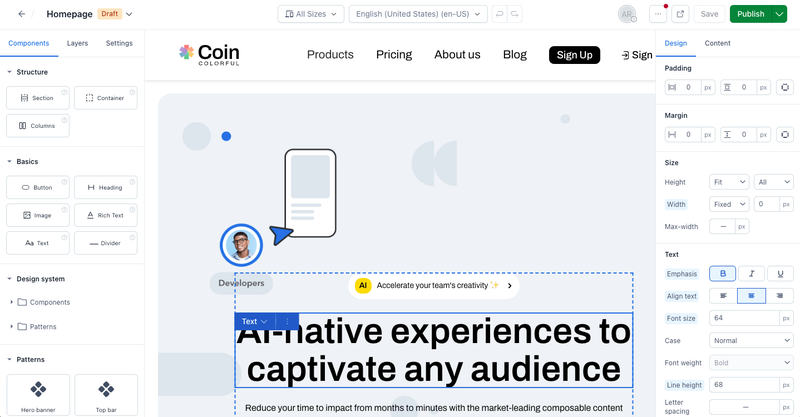
Both platforms offer real-time preview, but they approach editing differently. Contentful’s structured, field-based workflow offers strong control with its content created in fields, supported by live preview so editors can see updates as they work. This suits teams who prefer a more structured, form-led workflow and gives developers a lot of control over how content is organised.
Historically, Contentful has been primarily field-based, but in March 2024 it introduced Contentful Studio, its new visual editing layer. Studio brings in more in-context, component-driven editing and represents a clear evolution in their approach. At the moment, Studio appears to be part of higher-tier plans and requires additional setup, so its availability will vary depending on the licence and implementation.
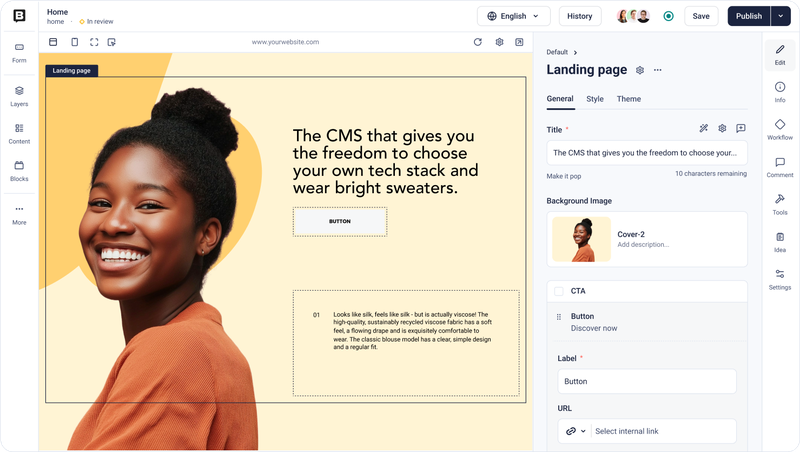
Storyblok was built around visual editing from the start, giving teams an in-context experience across mobile and desktop that often makes everyday publishing quicker and more intuitive.
Its editor shows the page exactly as users will see it, with real-time updates and the ability to switch instantly between desktop, tablet and mobile views. Blocks can be moved, duplicated or updated in context, which gives editors confidence and significantly speeds up day-to-day changes.
This visual approach is one of Storyblok’s standout strengths, and it’s a large part of why marketing and content teams often enjoy using it. The editor is built in, works out of the box and doesn’t require additional products or configuration. With instant updates and the ability to switch between mobile and desktop views as they work, it makes everyday updates quicker and gives teams far more confidence when publishing changes.
Flexibility and Content Modelling
Content modelling is simply the way your website content is structured behind the scenes. A good model makes it easy to create new pages, reuse content and keep everything organised as your site grows.
Both Contentful and Storyblok offer strong flexibility, but they take different approaches to how content is structured.
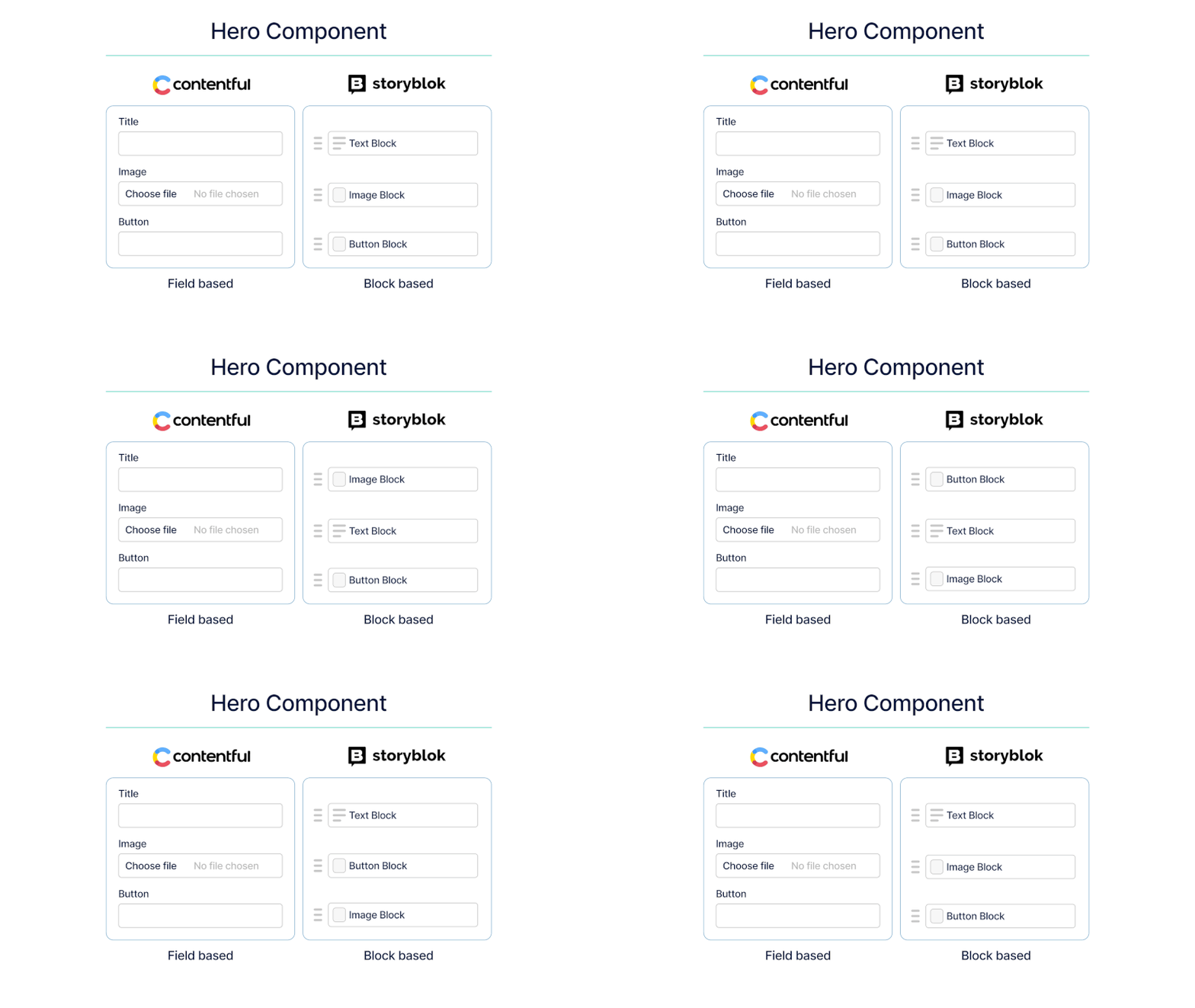
Contentful uses a field-and-reference approach where content types are built from individual fields, and entries are linked together to form pages or components.
This works well for developer-led teams, giving developers a high degree of control and allows for very detailed structures. It works well for complex models or organisations with strict governance, though it can become harder for non-technical editors to understand as it grows.
Whereas, Storyblok takes a component-based approach.
Content is organised into reusable blocks that can be combined to build pages or shared across markets. Each block contains its own fields, making the structure easy to follow. This approach keeps things cleaner and more intuitive, which helps teams keep content organised as the site grows. For many enterprise organisations, this leads to a smoother long-term content management experience.
Workflow and Collaboration
Contentful includes built-in workflow and automation features that allow teams to move content through different stages, set approval steps and receive notifications. More advanced workflows, such as multi-step approvals or automated actions, depend on the plan and may require configuration. Integrations with tools like Slack, Teams and email help support wider organisational processes, which can be helpful for large, distributed teams.
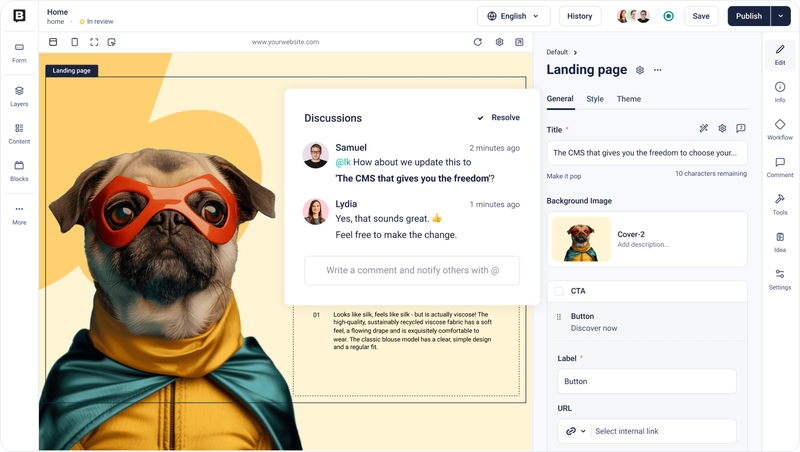
Storyblok provides built-in workflows with approval stages, scheduling and contextual comments. Editors can leave feedback directly on specific fields or components, which is especially useful for global teams.
Storyblok has also introduced a new calendar-style scheduling view, giving teams a visual overview of upcoming releases across different markets and time zones.
Roles and permissions are straightforward to manage, and scheduling makes it easy to coordinate launches or multi-market updates.
Developer Experience
A great website depends on great development, and the tools developers work with have a direct impact on the final product. When developers enjoy using a platform, everything from build quality to speed of delivery improves.
Both Contentful and Storyblok offer strong developer experiences that support different types of teams.
Contentful is known for its stable APIs, clear documentation and long-standing presence in the headless space.
Many developers have used it before, so onboarding is usually quick. Contentful stores most pieces of content as individual entries. This gives developers strong control over structure, although it can create long chains of references as sites grow.
Smaller elements, such as buttons or labels, can also become separate entries, which sometimes leads to deeper nesting and more screens to move between. Contentful integrates well with modern frameworks and has a mature ecosystem, which makes it a reliable choice for enterprise projects that need consistency and long term stability.
Storyblok offers a modern developer experience built around fast APIs, a clean component structure and strong support for frameworks like Astro, Next JS and Nuxt.
Its block based model keeps related content together, which can reduce nesting and make the overall structure easier to follow, helping teams build clear, reusable and scalable code.. Developers often find this approach clearer and more enjoyable to work with, especially on large or complex websites.
The visual editor works smoothly with local development, which reduces iteration time and encourages collaboration between designers, developers and content teams.
Framework and language support
| Framework | Contentful SDK | Storyblok SDK |
|---|---|---|
| JavaScript / TypeScript | Yes | Yes |
| React | Yes | Yes |
| Vue | Yes | Yes |
| Next JS | Yes | Yes |
| Nuxt | Yes | Yes |
| Astro | Yes | Yes |
| Svelte | Yes | Yes |
| Node JS | Yes | Yes |
Both platforms also work with other languages such as PHP, Python, Go and .NET through their APIs, so teams have full flexibility regardless of their tech stack.
Contentful provides strict structure through its entry based model. Storyblok focuses on component driven development which many developers find faster, clearer and more enjoyable.
Happier developers often deliver better results, which makes Storyblok a strong fit for teams that prefer a more visual, component based way of working rather than a strictly entry led model.
Global content and localisation
Most enterprise websites need to support several markets, languages and regional teams. A modern CMS should make this simple by offering clear localisation workflows, strong governance and efficient translation tools.
As AI translation becomes part of everyday publishing, teams also need a CMS that can support new approaches. Contentful and Storyblok both serve global organisations well, although they take slightly different approaches.
Contentful provides a structured localisation model where content is created once and translated into many locales. It is ideal for organisations that need strong governance, approval chains and consistency across markets.
We used Contentful to help Quorn Foods launch in 21 countries, each with tailored content, localised campaigns and regional variations. Contentful also connects with AI translation providers through its marketplace, so teams can build workflows that suit their own processes and quality expectations.
Storyblok is particularly strong for multi- market teams because of its reusable components and intuitive editor experience. It supports several translation approaches, including field level translation, folder level translation and a blended model where different parts of the site use different methods.
This flexibility is a major advantage for global organisations. For example, our work with Amtico Flooring uses folder level translation for the main website so each market can have its own structure and content, and field level translation for products where consistency across regions is important. Storyblok also supports AI assisted translation, which helps regional teams work faster and stay aligned.
The best choice depends on how many markets you manage and how much autonomy you want each team to have.
Asset Management
Managing images and media is a core part of running a modern website. In a modern CMS you should not need to worry about resizing images, compressing files or manually preparing every asset.
A good system should take care of optimisation automatically, and it should make it easy for global teams to organise files, apply metadata and reuse assets with confidence.
Both Contentful and Storyblok offer strong tools in this area, although they focus on slightly different priorities.
Contentful provides a central asset library where teams can upload images, PDFs and other media. Editors can add titles, alt text and metadata, and assets can be reused across entries.
Contentful also supports on the fly image transformations through its API. This helps developers deliver optimised images without relying on manual resizing, and is especially useful for high traffic websites. Larger organisations often rely on naming conventions and governance to keep the library organised as it grows.
Storyblok also includes a central asset library with tagging, folders and metadata fields. Editors can manage alt text and titles directly within the asset view, and Storyblok now offers AI assisted alt text suggestions, which can help keep accessibility standards consistent across large teams.
Storyblok provides on the fly image transformations too, so optimised images are delivered automatically based on device and size. The platform has also introduced new enterprise features that improve visibility and control when working with shared global libraries.
DAM Integrations
Many enterprise teams use external DAM systems to manage large volumes of brand assets. Both platforms integrate well with the most widely used DAM providers.
| DAM Provider | Contentful | Storyblok |
|---|---|---|
| Cloudinary | Yes | Yes |
| Bynder | Yes | Yes |
| Frontify | Yes | Yes |
Handling Video
Both platforms support video uploads, although neither provides built in video compression or transcoding. For teams working with large or high resolution video, we normally recommend a dedicated service such as Cloudinary to handle optimisation and delivery.
So how do they compare? Both platforms provide strong asset management and help teams avoid the manual work that older CMSs required.
Contentful offers powerful image transformation tools and a reliable central library.
Storyblok focuses on clarity and ease of use, with editor friendly organisation and AI supported alt text to help maintain accessibility. For multi market teams, the choice often depends on governance needs and how assets are structured across regions.
Performance and Optimisation
Performance is critical for user experience, search visibility and now for generative AI. Fast sites with clean structures are easier for search engines and AI systems to understand.
A modern CMS should support strong performance and make it simple to optimise content without adding complexity. Contentful and Storyblok both provide the tools developers need to build fast, well organised websites.
Contentful delivers content through a fast global CDN and supports stable REST and GraphQL APIs. Developers have full control over how content is fetched and rendered, which helps when building sites that focus on strong Core Web Vitals. Contentful also works smoothly with modern frameworks such as Astro, Next JS and Nuxt, so teams can take advantage of static generation and server side rendering techniques.
Contentful does not generate structured data automatically, but it gives developers the flexibility to add clean, well organised schema markup. This helps search engines and AI systems understand content more clearly.
Storyblok also provides fast global delivery and very quick APIs. Its component based structure allows teams to fetch only the blocks they need, which helps keep payloads lean. Storyblok works naturally with frameworks such as Astro and Next JS, which makes it straightforward to achieve strong Core Web Vitals with less development effort.
Structured data can be added cleanly through components, and many teams choose to wire schema markup directly into their blocks. This creates a consistent and AI friendly structure that is easy to maintain and extend as content evolves.
Both platforms give development teams everything they need to build fast, optimised websites. They work well with modern frameworks, support global delivery and make it easy to keep content structured and predictable. In practice, performance is driven more by how the front end is built than by the CMS itself.
Contentful and Storyblok both provide a solid foundation for teams who want to achieve strong Core Web Vitals and deliver content that is easy for search engines and AI systems to understand.
AI and Futureproofing
AI is changing how content is created, understood and discovered. A Headless CMS is well suited to this shift because it stores content in a structured way that AI systems can read and use more effectively.
Teams now need a platform that supports clean, reusable content for AI driven search, integrates with new tools and adapts as digital channels evolve. A future ready CMS should help teams work faster today while giving them confidence that their content will continue to perform in an AI first world. Contentful and Storyblok both support this direction, although they focus on different areas.
Contentful provides a flexible content model that works well with structured content for AI systems. It integrates with third party AI tools through its marketplace and API, which allows teams to add translation, enrichment or content generation features into their workflows. It is well suited to organisations that want to build their own AI processes on top of a stable content platform. Its predictable structure helps AI systems interpret content consistently across different channels.
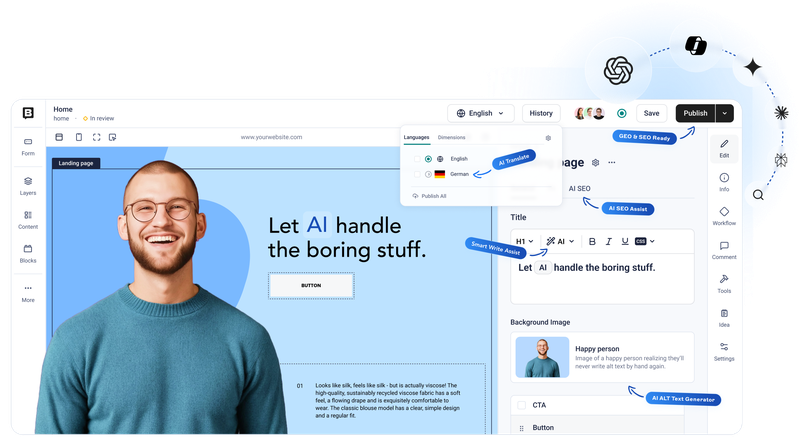
Storyblok has placed AI at the centre of several new features.
- Strata gives content deeper meaning and context, which helps AI systems understand how content relates across a website.
- OtterlyAI gives teams visibility into how AI interprets their content, making it easier to optimise pages for AI driven search.
- FlowMotion introduces automation into content workflows and helps teams connect AI tools into everyday publishing tasks.
Storyblok also includes an Ideation Room that helps teams brainstorm, plan and shape new content with AI support, which speeds up early stage content creation. The platform also provides AI assisted alt text and content suggestions to help teams maintain consistency. You can read more about these features in our article on the future of headless CMS.
Reviews
| Storyblok | Contentful | |
|---|---|---|
| G2 | 4.5/5 | 4/5 |
| Capterra | 4.5/5 | 4.5/5 |
| TrustRadius | 9.6/10 | 7.5/10 |
| GetApp | 4.3/5 | 4.5/5 |
| Gartner | 4.5/5 | 4.4/5 |
| Software Advice | 4.3/5 | 4.5/5 |
All ratings shown are accurate at the time of publication. Review scores and volumes may change as new feedback is added.
Which CMS is right for your team
Contentful and Storyblok are both strong enterprise CMS platforms, but they have grown in different ways. Contentful has been part of the headless CMS market for a long time and is known for its stability, flexibility and structured approach to content. Storyblok is a newer platform, but it has matured quickly and now offers a rich feature set with a strong focus on editor experience. This has made it popular with teams that want to create, manage and publish content with more confidence.
As an agency, we have extensive experience with both platforms. For many years, we were firmly in the Contentful camp. Our work with Quorn Foods and their global digital ecosystem is a good example, with the platform running successfully for more than nine years across multiple regions. In recent years, we have seen more clients needing greater control and flexibility, particularly as teams have become more distributed and content demands have increased. This is where Storyblok has often been a great fit.
Our work with Amtico Flooring shows how well Storyblok can support multi-market content, visual editing and reusable components that allow teams to update pages confidently and quickly. Developer support is still available when new features are needed, but day-to-day content changes can be handled more easily by the marketing team.
Both platforms sit in the premium headless CMS space and both support high performance, strong security and AI-ready content structures. The right choice depends on what your organisation values most. Contentful is ideal for complex architectures and teams with strong engineering resources. Storyblok is a great fit for organisations that want speed, flexibility and an editor experience that empowers teams to create and publish without friction.
Choosing the right platform is about understanding how your team works today and how you plan to grow. Both Contentful and Storyblok can support that growth, but they shine in different ways.
Why platform choice matters less than implementation
For most enterprise teams, the success of a new CMS is driven more by how it is planned and delivered than by the platform itself. Contentful and Storyblok are both capable of supporting complex websites, multi-market rollouts and long-term growth. The real difference comes from getting the foundations right.
Clear discovery, well-structured content, agreed governance and thoughtful migration planning have a far greater impact on results than choosing one tool over another.
Adoption also plays a major role. When teams are trained properly, understand how the system works and have the right workflows in place, the CMS becomes an asset rather than a bottleneck. A platform that is implemented well will outperform a stronger tool that is implemented poorly.
For most organisations, the key is not simply choosing between Contentful and Storyblok. It is making sure the chosen platform is set up in a way that supports your people, processes and long-term digital goals.
For guidance and to avoid common mistakes, get in touch with our specialist headless CMS team.
Frequently asked questions: Contentful vs Storyblok
Is Contentful or Storyblok better for enterprise organisations?
Both platforms are capable enterprise CMS solutions, but they take different approaches. Contentful is often favoured by organisations with complex content models and developer-led teams, while Storyblok appeals to businesses that want a stronger visual editing experience for marketers and content teams.
How much does Contentful cost compared to Storyblok?
Pricing varies depending on usage, team size and enterprise requirements, but Storyblok is often seen as the more cost-effective option for growing teams. Contentful’s pricing can increase as content volume, users and environments scale. Enterprise organisations should evaluate the total cost of ownership, including licensing, implementation and ongoing maintenance, rather than platform fees alone.
How long does it take to implement Contentful or Storyblok?
Implementation timelines depend on the complexity of the project, integrations and migration requirements. A straightforward website can often be delivered in a matter of weeks, while large enterprise implementations involving multiple markets, systems and content migrations may take several months. In most cases, the platform itself is less of a factor than the scope of the digital ecosystem being built around it.
Which platform is easier for content editors to use?
Storyblok generally provides a more intuitive experience for non-technical users thanks to its visual editor and live preview capabilities. Contentful offers a clean editorial interface but often requires more reliance on content structures and separate preview environments.
Can both platforms support multiple websites, regions and languages?
Yes. Both Contentful and Storyblok support multi-site, multi-language and global content operations. The best choice depends on how your organisation manages localisation, content governance and regional publishing workflows.
Which CMS offers more flexibility for developers?
Contentful provides extensive APIs, integration options and content modelling flexibility, making it a strong choice for organisations with complex technical requirements. Storyblok is also developer-friendly but places greater emphasis on component-based content management and visual editing.
How should enterprise teams choose between Contentful and Storyblok?
The decision should be based on your team’s priorities. If content governance, structured content and technical flexibility are the primary requirements, Contentful may be the better fit. If empowering marketers, improving editorial workflows and reducing dependency on developers is a priority, Storyblok is often worth considering.
Experts in CMS, search and CRM integrations


 5 minute read